


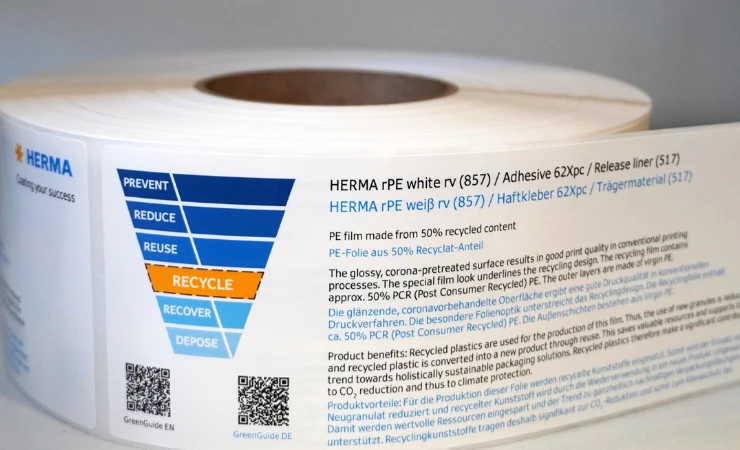
Labelling waste is one of those hidden costs that quietly builds over time, often without drawing much attention until it starts impacting efficiency.
Extra materials, bins filling up with liner, constant roll changes, and the small but frequent interruptions on the line – all contribute to a process that is more resource-heavy than it first appears. While each element seems minor in isolation, together they can affect both operational flow and overall cost.
In many cases, these inefficiencies aren’t immediately visible in reporting, but they show up in day-to-day operations through slower throughput, increased handling, and the need for additional labour to maintain output. It’s not something that usually gets attention until it starts affecting how the line actually performs.
Across different operations, the same pattern continues to emerge: manual handling, frequent changeovers, and waste that is simply accepted as part of the process. As businesses look more closely at where time, labour, and materials are being absorbed, linerless labelling is starting to come into the conversation more often.
Plus, it doesn’t mean walking away from traditional labelling – it’s about having the flexibility to support both, depending on what your operation needs.
For many, it starts with a simple question: how much time, material, and labour is actually being absorbed by this part of the process?
Solutions like the cab HERMES linerless print and apply system are designed for integration into production lines, enabling automatic printing and application of labels, reducing downtime through fewer roll changes, and supporting a wide range of materials and applications.
Its compatibility with existing applicators and setups also allows businesses to transition without major disruption, making it easier to adopt linerless alongside current processes.
The result is a more efficient, consistent, and flexible labelling approach, with less waste, fewer interruptions, improved use of labour, and measurable cost savings over time. It also supports broader sustainability goals by reducing material waste and minimising what ends up in the waste stream.
That’s the shift, and for many, it starts with taking a closer look at what’s already happening on the line.
For businesses looking to better understand how linerless labelling could fit within their operation, further information is available through the link https://resultgroup.com.au/cartons/