Blog
Why ink determines CIJ success
And why the best coding performance comes from getting the printer, ink, substrate and production environment working together
When companies invest in a CIJ printing system, the printer itself is usually the first thing they look at, along with print speed and total cost of ownership. That makes sense. What is sometimes overlooked is the role of the ink. Ink is not simply a consumable. It is a critical part of the coding process and has a direct impact on whether codes remain readable, adhere properly, dry quickly and continue performing reliably on the production line over time.
That matters across a wide range of industries, from food and beverage through to cosmetics and extrusion applications. Materials change. Production speeds increase. Conditions such as condensation, dust and heat can affect performance. At the same time, requirements around traceability and process reliability continue to grow. All of this makes choosing the right ink an important part of getting CIJ coding right.
CIJ does not work with “just any ink”. It works with the right match.

A clean, reliable CIJ print comes down to the right combination of four things:
• What is being printed? Text, logos, barcodes or 2D codes, and what level of contrast and scanner readability is required?
• What is being printed on? The material, surface characteristics, coatings and additives such as plasticisers.
• At what speed and in what environment? Line speed, temperature, humidity, condensation and cleaning chemicals can all affect the result.
• What does the code need to withstand? Abrasion, drying time, washing or removal requirements, or special functions such as UV fluorescence or colour changing properties.
Getting that combination right is important because problems such as set off, smearing and poor adhesion are often caused by an ink that is not ideally matched to the application, or by changes to the substrate or production process.
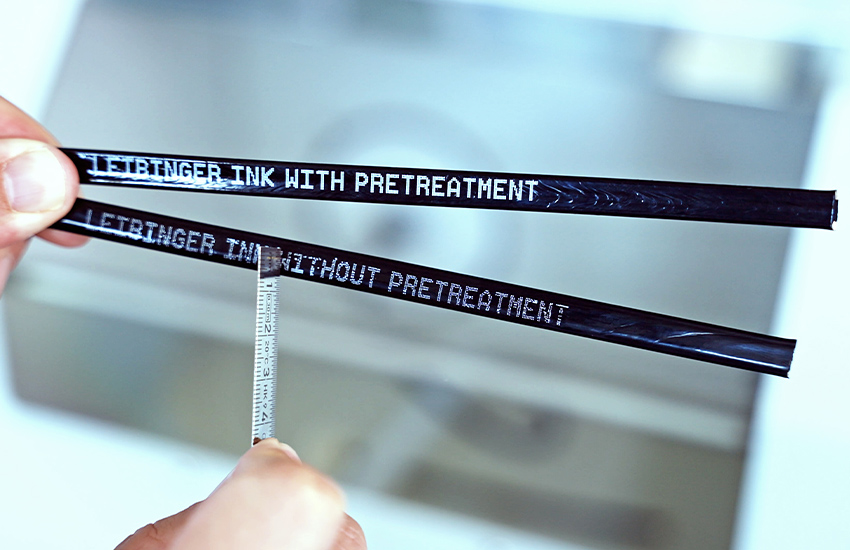
PVC is a good example. Coding onto rigid PVC, such as pipes, can be relatively straightforward. With more flexible PVC applications, such as cable insulation, plasticisers can make adhesion much more difficult. If the ink formulation is not suited to the material, the risk of set off increases significantly.
It shows why simply knowing the name of the material is not enough. The exact composition of that material matters too.
What industrial CIJ inks need to deliver, and why there are so many options?
In CIJ applications, the aim is not simply to find “a good ink”. It is to find the right combination of properties for the application.
That is why there are different ink classes, colours and specialist formulations.
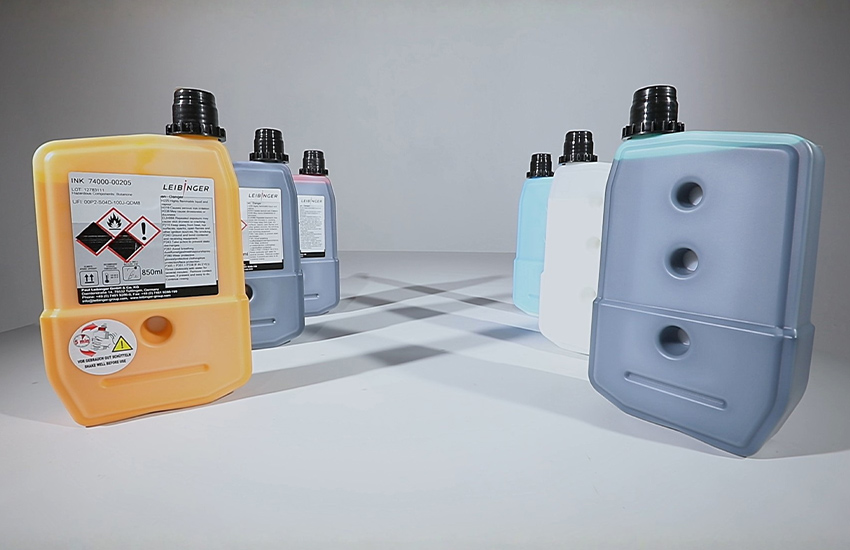
Our partner’s (LEIBINGER) portfolio includes around 70 inks, developed, manufactured and tested with one clear objective: to provide the best possible combination of ink and coding technology for each application.
Typical properties that can make a real difference in production
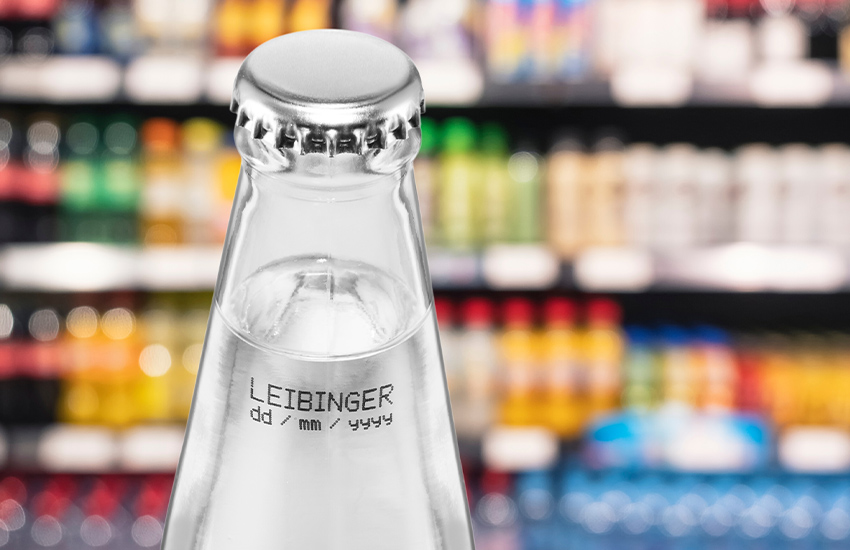
Quick drying
For high speed production lines and products that need to be handled immediately.
Printer and ink expertise work best together
When the printer and ink are developed together, the whole coding system can be designed to work as one.
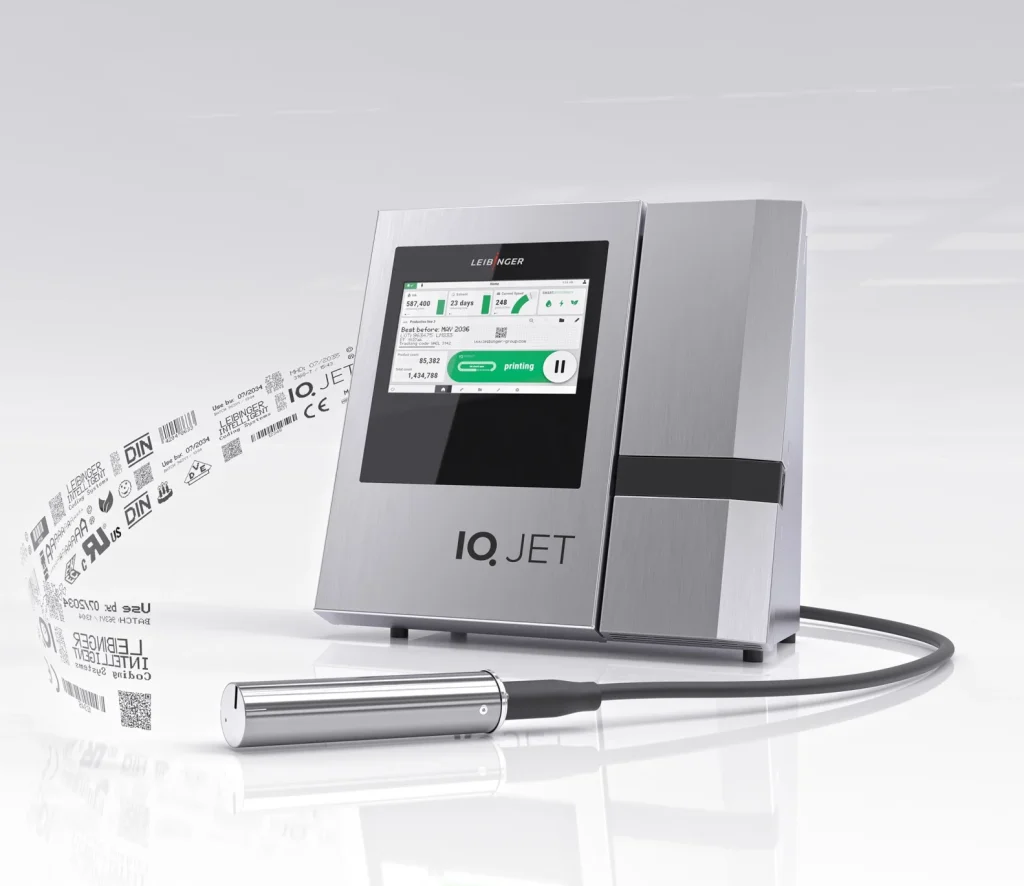
LEIBINGER develops and manufactures both its CIJ printers and matching inks in house. That means everything from how the ink behaves in the printhead through to adhesion and readability on the product can be considered as part of the same system.
That matters because CIJ ink has to do more than simply perform well on the material being printed. It also needs to work reliably inside the printer under real production conditions.
By developing and testing the printer and ink together, LEIBINGER can optimise the complete system for consistent print quality and reliable day to day operation.

No ink drying inside the printhead
One thing that can easily be overlooked in CIJ printing is what happens when ink starts to dry inside the printhead. The issue is not just the contamination you can see. It is what is happening inside the system that can cause the bigger problem.
In CIJ technology, ink droplets are electrostatically charged inside the printhead and guided by deflection plates so they land in exactly the right position on the product. For clean, consistent coding, that droplet control needs to remain stable throughout production.
In conventional CIJ systems, startup involves a rapid build up of pressure to create the ink jet. This can cause what is known as the “spitting effect” inside the printhead.
Tiny ink particles can spread across the electrostatic components, affecting how the droplets are charged and deflected. At first, the changes may be very small, but over time they can build up and lead to droplets landing out of position.
There is another issue during production stops. In conventional CIJ printers, these critical areas remain exposed to air. Ink residue can dry on the nozzle, deflection plates and return line, creating deposits over time.
The result is a gradual decline in print quality.
LEIBINGER solves this differently by design. Its automatic nozzle sealing technology hermetically seals the system during production pauses. At the same time, the system continuously circulates the ink, maintaining stable viscosity.
As a result, no spitting effect occurs during startup and its associated disadvantages are avoided: no deposits on electrostatic components, no drying – and consistently high print quality from the first print to the last.
Pigmented inks? Absolutely YES – with CIJ models designed for them
Highly pigmented inks are extremely valuable when strong contrast is required on dark substrates. At the same time, pigments place greater demands on process control: sedimentation, deposits, and fluctuating viscosity can negatively affect print quality and system stability.
LEIBINGER addresses these challenges directly at the system level. Intelligent ink management with an automated stirring system inside the tank keeps pigments moving, reduces sedimentation and related deposits, and stabilises viscosity.
For production and technical decision-makers, this is highly relevant because it directly impacts key operational questions: How stable does the production line run? How frequently does the printer require cleaning? How reproducible are codes over weeks and multiple shifts?
The fastest way to the right ink:
Don’t guess – test
The reality is this: with modern materials, coatings, and additives, the “right” ink cannot reliably be selected based on instinct or a datasheet alone. That is why LEIBINGER follows a practical, application driven approach.
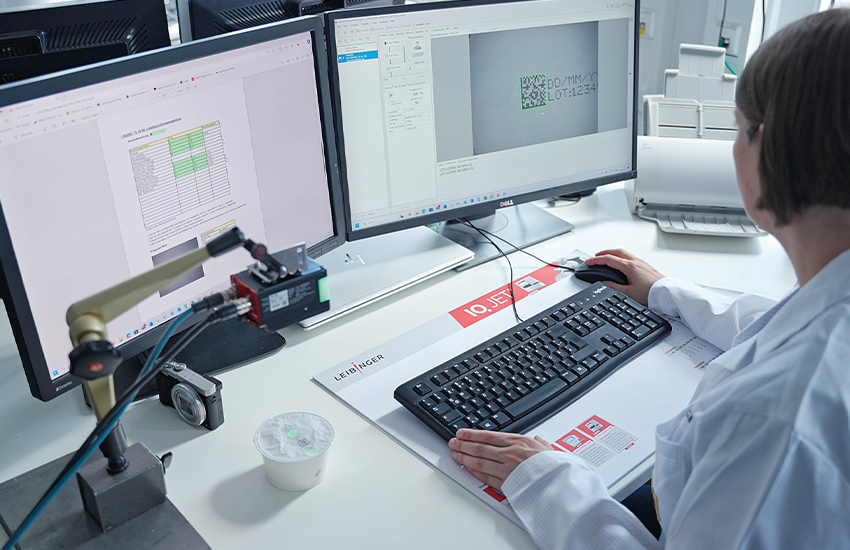
At Leibinger’s Application Center, they test the compatibility of substrates, process requirements, and inks under realistic conditions, including acceleration units that simulate actual production speeds and, where necessary, suitable pre treatment methods such as corona or plasma treatment to optimise adhesion. The result is a well founded, application specific decision basis for a complete CIJ solution that performs reliably in everyday production.
Planning to introduce a new CIJ system or stabilise your coding process?
Send us your product or packaging samples along with your application requirements. We will provide a complete CIJ solution that does not just print, but delivers reliable production performance.
Contact us to request a free print sample.