

A new development in self-adhesive label materials could help improve the quality of recycled polypropylene by making labels and printing inks easier to remove during recycling.
Removing labels from polypropylene packaging has long been a challenge for recyclers. Unlike PET, where established recycling processes can separate different materials more readily, polypropylene packaging and its film labels have similar densities, making separation more difficult.
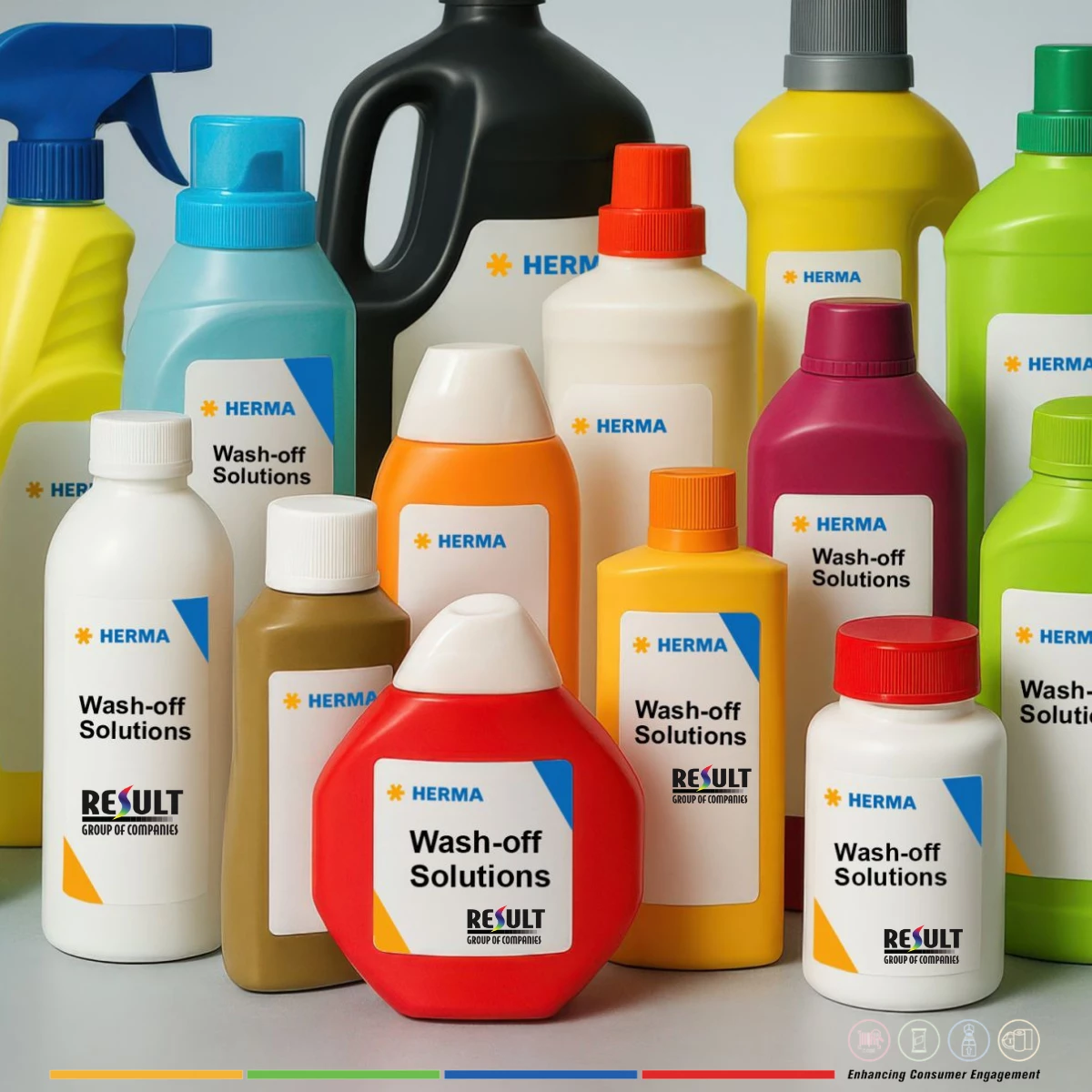
HERMA has taken a significant step towards addressing the problem, becoming what it believes to be the first manufacturer to secure independent certification for the removal of PP and PE self-adhesive labels from rigid polypropylene packaging using a cold-water wash.
The certification covers seven self-adhesive materials that can be removed during washing at 40°C, allowing labels and their associated printing inks to be separated from the packaging before the plastic is processed into recycled material.
The development is particularly relevant to food packaging, where polypropylene is commonly used for yoghurt tubs, deli containers and other rigid packs.
Tackling a longstanding recycling challenge
The difficulty with polypropylene recycling lies partly in the materials used to decorate and identify the packaging.
PP and PE label films, together with their adhesives, have densities close to that of the polypropylene container itself. This makes it difficult to separate the materials using conventional density-based methods.
Instead, labels need to be detached during washing before the different materials can be separated using air classification.
If labels remain attached, printing inks and other contaminants may enter the recycling stream, affecting the appearance and quality of the recovered plastic.
According to Dr Stefan Kissling, Head of Adhesive Coating and Special Coatings at HERMA, the industry has traditionally paid less attention to the role of labels in polypropylene recycling.
“The fact that labels can now demonstrably be separated from the actual packaging material during a cold wash is a major step forward,” he said.
With European packaging regulations placing greater emphasis on recyclability, the ability to remove labels effectively is becoming increasingly important.
Seven materials independently certified
The certification was awarded by the independent cyclos-HTP Institute following testing under its CHI Recyclability Standard.
The assessment focused on the rigid polypropylene recycling stream and took into account Category 12 of the European Union’s Packaging and Packaging Waste Regulation (PPWR).
Six polypropylene films and one polyethylene film were certified, covering a range of commonly used self-adhesive labelling applications.
The certified range includes HERMAtherm PP el (827), HERMA PP plus (829), HERMA PP white super tc (881), HERMA PP white light (884), HERMA PP 50 transparent super tc (886) and HERMA PP white 40 (892).
HERMA PE white (850) was also certified for applications requiring greater label flexibility.
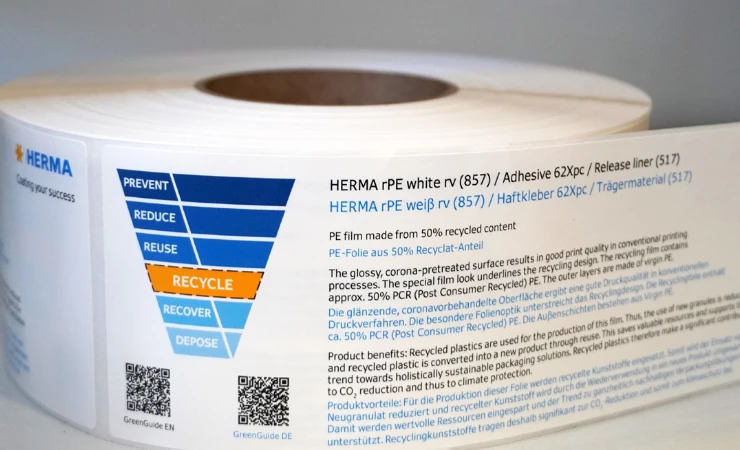
Central to the development are two multilayer pressure-sensitive adhesives produced by HERMA.
The company’s 72Hpw adhesive is used across the six PP films, while the PE film uses 62Xpc, an adhesive specifically developed for film applications.
Both are designed to maintain adhesion during normal product use while enabling label removal under the certified washing conditions.
The ability to achieve separation at 40°C is another important aspect of the development, with lower-temperature washing offering potential energy savings compared with processes that require higher temperatures.
Implications for Australian packaging
Although the certification is linked to European regulatory requirements, the technical challenge it addresses is not limited to Europe.
Australian packaging manufacturers and brand owners are also under pressure to improve recyclability and consider how packaging components behave once they enter the waste and recycling system.
Much of that attention has traditionally focused on the container itself. Yet labels, adhesives and printing inks can have a considerable influence on the quality of recovered material.
HERMA’s latest development demonstrates how changes to label construction can help address contamination at the recycling stage without necessarily changing the primary packaging material.
For businesses using rigid polypropylene packaging, it also highlights the importance of considering the complete packaging structure when assessing recyclability, rather than treating the container and label as separate decisions.
The certification does not automatically establish compliance with Australian recycling requirements, and performance will depend on the materials used and the recycling processes available.
Nevertheless, the development represents progress in an area of packaging recycling where practical solutions have been difficult to establish.
HERMA self-adhesive materials and labelling solutions are represented in Australia by Result Group.
Source: HERMA, 26 October 2026.